Samsung Appliance Fault Code Diagnostic Guide
Samsung appliance error codes usually become easier to understand when they are connected to the way the appliance is acting at home. For many homeowners in Waltham and nearby Massachusetts communities, the display message is not the main problem. The bigger concern is whether the washer stopped with water still inside, whether the dishwasher failed to fill or drain, whether the refrigerator started cooling unevenly, whether the dryer lost heat, or whether the microwave began showing repeated faults and stopped responding normally.
In most cases, a Samsung code works as a system alert rather than a final diagnosis. It usually points to the operating area where the appliance has detected abnormal performance, such as water flow, drainage, door operation, heating, sensing, communication, or power supply. That is why the code becomes much more useful when it is matched to the real symptom the homeowner is already noticing.
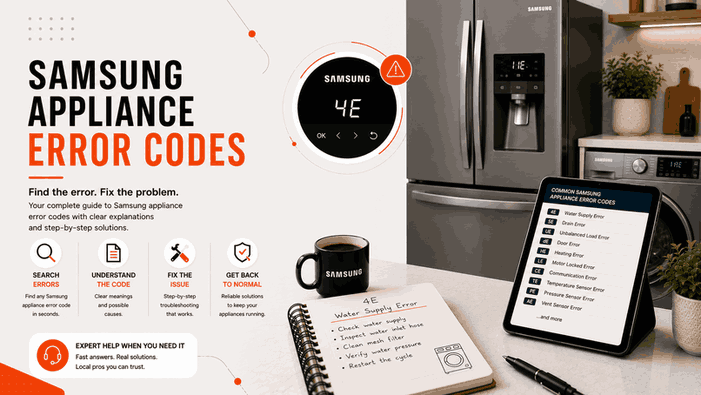
Why Samsung Codes Often Make More Sense Through the Appliance’s Behavior
One of the most practical things about Samsung error codes is that they often appear after the appliance has already started behaving differently. That makes the code more useful as a confirmation of a real operating change.
A washer alert matters more when the cycle stops halfway through. A dishwasher code means more when the tub still has water in it. A refrigerator warning deserves more attention when cooling no longer feels stable. A dryer alert becomes more important when heat or timing changes during normal use. A microwave fault stands out more when the unit starts rejecting commands or working inconsistently.
For homeowners, this behavior-first view is often the clearest way to tell whether the issue was brief or whether the appliance is beginning to show a recurring system problem.
Samsung Washer and Dishwasher Fault Code Guide
Samsung Washer and Dishwasher Codes That Often Show Up Through Water or Door Problems
Samsung washers in your file are grouped mainly around water level, leakage, fill, drain, overflow, door, and power-related faults:
Samsung Washer Water, Drain, Door, and Power Codes
1E / LE / 1C / LC / LC1 / 1 1C / 1 LC / 4C / 1 4C / nF / 4E / nd / 5E / SE / 5C / SC / 1 5C / OE / 0E / OC / 0C / 1 OC / 1 0C / 9C1 / 9C2 / PF / 3E / 2E / 9E1 / 9E2 / UC / 19C1 / 19C2 / dS / d5 / FL / LO / L0 / dE / dE1 / dE2 / dC / dC1 / dL / 1 dC / 1dC4 / 1dC1
This code family covers many of the issues homeowners notice first. These alerts usually point to water-level trouble, leakage detection, no-fill conditions, drain faults, overflow problems, door errors, or voltage irregularities. In real use, that may mean the washer stops mid-cycle, fails to drain, refuses to lock, or does not begin normally.
Another washer group involves jammed button faults:
E2 / bE2 / 6E2 / BE2 / 8E2
Samsung Dishwasher Water Supply, Drain, Pump, and Level Codes
On Samsung dishwashers, the main group is tied to water supply, drain, pump, and water-level conditions:
3C / 3E / 4C / 4E / 5C / SC / 5E / SE / 9E
These alerts usually point to supply issues, drain problems, pump trouble, or low water-level detection.
Other dishwasher groups may include:
Filter or heater-related code: 1E / IE
WaterWall reflector code: 7E
These warnings usually matter most when a dishwasher cannot fill correctly, cannot drain, or stops before completing the cycle.
Samsung Refrigerator and Dryer Fault Code Guide
Samsung Refrigerator and Dryer Alerts That Can Change Daily Reliability Quickly
Samsung refrigerator alerts in your file are centered on fan, defrost, communication, and power-related problems:
Samsung Refrigerator Fan, Defrost, Communication, and Power Codes
21E / 22E / 22C / 41 / 42 / 41C / 88 88 / 83E / 85E / 86E / PC ER / PC CH / 5E
This code family often points to fan trouble, defrost faults, communication issues, or power-related errors. In normal home use, homeowners may notice weak cooling, unstable temperatures, display problems, or repeated cooling interruptions. Because refrigerator performance affects food storage, repeated cooling or communication warnings usually deserve faster attention than a one-time display event.
Samsung Dryer Voltage, Door, Temperature, Heating, and Communication Codes
Samsung dryers are grouped mainly around voltage, door, temperature, heating, communication, and power-frequency problems:
9C1 / 9E / 2E / 9E1 / dC / dE / dF / do / d0 / 1 DC / 1 dF / tS / t5 / tC / tO / t0 / tE / tE3 / tC5 / tCS / 1 tC / 1tC5 / 1tCS / HC / hE / HC4 / 1 HC / AC / Et / AE / EEE / AE4 / AE3 / AE5 / E3 / 1 AC / FC / FE / 1 FC
These alerts often relate to voltage problems, door faults, sensor issues, heating failure, overheating, communication errors, or power-frequency problems.
Other dryer groups may include:
Jammed button codes: bE / bE2 / bC2 / 6E / 6E2 / 6C2
Vent-test drum code: C1 / CL1
For homeowners, these dryer warnings usually matter most when the machine stops heating, interrupts the cycle, or never finishes the load the way it should.
Samsung Cooking and Microwave Fault Code Guide
Samsung Cooking and Microwave Codes That Often Point to Control or Communication Trouble
For Samsung ranges and wall ovens, the main family in your file involves door, communication, and electronics-related faults:
Samsung Range and Wall Oven Door, Communication, and Electronics Codes
door / C-F0 / all other error codes
These warnings usually point to a door-detection problem, a communication fault, or an internal electronics issue. In normal home use, these alerts often make the most sense when they appear together with repeated beeping, door trouble, or cooking functions that stop responding normally.
Samsung Microwave Sensor, Door, Function, and Communication Codes
Samsung microwaves are grouped around sensor, door, function, and communication-related issues:
C-10 / C-11 / C-12 / C-20 / C-21 / C-22 / C-70 / C-71 / C-72 / C-A0 / C-A1 / C-A2 / C-d0 / C-d1 / C-d2 / C-F0 / C-F1 / C-F2 / E-01
These alerts usually point to sensor faults, door problems, function errors, or internal communication issues. If the same code keeps returning, the microwave is usually dealing with more than a simple restart issue.
What Waltham Homeowners Should Notice Before Booking Service
The best first step is to compare the code with the appliance’s actual behavior. Look for no fill, no drain, weak cooling, no heat, door trouble, repeated beeping, or a cycle that stops too early.
That kind of safe observation usually gives a clearer picture of whether the problem was temporary or whether the appliance is showing a recurring operating issue that still needs attention.
When Repeated Samsung Alerts Usually Need In-Home Diagnosis
Repeated Samsung error codes often mean the appliance has not returned to normal operation, even if it powers back on. A system related to filling, draining, cooling, heating, door operation, sensing, communication, or power stability may still be under stress, and the repeated warning is often the clearest sign that the issue remains active.
For homeowners in Waltham and nearby Massachusetts communities, in-home diagnosis helps connect the code to the real appliance behavior affecting everyday use. Fast Fix Appliance Repair provides local in-home service with a focus on safe workmanship, careful diagnostics, clear communication, and warranty-backed repair results.
Contact Information
Fast Fix Appliance Repair – Waltham MA
📍 Address: 14 Middlesex Rd, Waltham, MA 02452
📧 Email: fastfixapplianceservice@gmail.com
☎️ Phone: +1 (508) 733-3351
🕒 Open Hours: 8:00 AM – 8:00 PM
Samsung Appliances Error Codes Table with Appliance Types, Meanings, and Service Notes
This Samsung appliances error code table shows each Samsung fault code by appliance type, listed meaning, first check, technician service note, and related help when available. It includes Samsung washer, dishwasher, refrigerator, dryer, range, wall oven, and microwave error codes, so each displayed warning can be matched with the correct table row and reviewed with Samsung’s official Washer Error Codes, Dishwasher Error Codes, Refrigerator Error Codes, and Microwave Error Codes resources.