
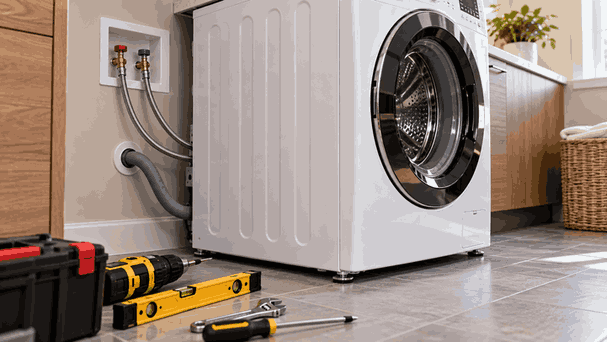
Professional Washing Machine Installation for Stable, Leak-Free, and Reliable Operation
Washing machine installation is the professional positioning, connection, leveling, setup, and testing of a residential washer so it can operate correctly with the available water, drain, and electrical connections. Fast Fix provides residential washing machine installation in Waltham, MA and surrounding service areas for front-load, top-load, compact, stackable, pedestal, and smart washer models.
Our technicians handle the key installation steps, including appliance placement, water-hose connection, drain setup, removal of shipping bolts where required, leveling, leak inspection, vibration checks, and final operational testing.
What a Complete Professional Washing Machine Installation Should Include
Professional washer installation involves more than moving the appliance into a laundry area and connecting a few hoses. The machine must be positioned correctly, remain level, connect properly to the available water supply and drain, and operate without excessive movement or leaks.
Depending on the washer type and laundry configuration, Fast Fix installation may include:
checking the installation area and appliance dimensions;
positioning the washer correctly;
connecting hot and cold water hoses to suitable existing water valves;
connecting the drain hose to an appropriate existing standpipe or drain setup;
removing shipping bolts or transport hardware where required;
checking access to a suitable existing electrical supply;
leveling the washer;
adjusting the appliance feet for stable placement;
checking visible water connections for leaks;
performing fill, drain, and spin testing;
checking for excessive vibration or movement.
The exact installation process depends on the washer design, available utility connections, floor condition, laundry layout, and manufacturer requirements.
Washing Machine Types and Configurations That Require Different Installation Methods
Fast Fix installs all major residential washer configurations.
This includes front-load washers, top-load washers, high-efficiency washers, compact washing machines, stackable washers, pedestal-mounted washers, and smart washing machines.
Front-Load Washers With Leveling and Transport Hardware Requirements
Front-load washers require careful leveling because an uneven machine may develop excessive movement during high-speed spin cycles.
Shipping bolts or other transport hardware must also be removed before normal operation when required by the model.
Top-Load Washers With Proper Lid and Hose Clearance
Top-load washers need stable floor placement, proper hose positioning, and enough clearance above the appliance for full lid movement.
Correct placement also helps keep water and drain connections accessible without excessive bending or pressure on the hoses.
Compact Washers for Limited Laundry Spaces
Compact washing machines are often installed in smaller laundry areas, closets, condos, apartments, or other spaces where installation clearances are limited.
Accurate measurements and access to water, drain, and electrical connections become especially important in these configurations.
Stackable and Pedestal-Mounted Washer Configurations
Stackable washers require stable positioning so they can support a compatible dryer and approved stacking system.
Pedestal-mounted models also need correct alignment and secure placement to maintain washer stability during normal operation.
Major and Premium Washing Machine Brands Supported
Fast Fix installs major and premium washing machine brands, including LG, Samsung, GE, Whirlpool, Maytag, Bosch, Miele, Electrolux, Frigidaire, KitchenAid, Amana, Fisher & Paykel, and other residential appliance brands.
Water Supply, Drain Hose, and Washer Connection Setup
A washing machine requires reliable access to both water supply and drainage for normal operation.
Fast Fix can connect washer supply hoses to suitable existing hot and cold water valves and position the drain hose in the available drain or standpipe configuration.
Connecting Hot and Cold Water Supply Hoses
The washer supply hoses should be connected securely to suitable existing water valves.
Correct connections help support normal filling while reducing the risk of visible leaks around the hose fittings.
Positioning the Drain Hose for Proper Water Removal
The washer drain hose should be positioned correctly within the available standpipe or drain configuration.
An incorrectly positioned drain hose may affect draining or contribute to unwanted water-related problems during operation.
Checking Visible Connections During Initial Testing
During installation, visible water and drain connections can be checked before and during initial testing.
These checks help identify obvious leaks, loose fittings, or improper hose placement before the washer is placed into regular use.
Front-Load Washer Setup for Stable Spin Performance and Reduced Vibration
Front-load washer installation requires particular attention to transport hardware, leveling, and vibration control.
Many front-load models are shipped with bolts or braces that secure the drum during transportation.
Removing Shipping Bolts and Transport Hardware Before Operation
Shipping bolts or transport hardware must be removed according to manufacturer instructions before normal washer use.
Leaving transport hardware installed can interfere with drum movement and contribute to excessive vibration or appliance damage.
Leveling the Washer to Control Movement During Spin Cycles
Correct leveling helps keep the washer stable during high-speed spin cycles.
The appliance feet can be adjusted so the washer sits evenly and maintains firm contact with the floor.
Stackable and Pedestal Washer Installation for Specialized Laundry Setups
Fast Fix can install washers designed for use with compatible pedestals or stacking systems.
Each configuration requires stable positioning and compatible installation hardware.
Installing Washers on Compatible Pedestals
Proper pedestal alignment and attachment help maintain appliance stability while raising the washer to a more convenient working height.
The washer and pedestal should remain aligned and stable during normal operation.
Preparing Washers for Compatible Stacked Laundry Systems
For stackable configurations, the washer must be positioned correctly and prepared for use with a compatible dryer and approved stacking system.
Stable placement is especially important because washer movement can affect the entire stacked assembly.
Replacing an Existing Washer Without Compromising Fit or Connections
Fast Fix provides replacement washing machine installation when a new washer is being installed in an existing laundry space.
A replacement model may differ from the previous machine in width, depth, hose location, door direction, drain requirements, or overall height.
Before installation is completed, the available space and existing water, drain, and electrical connections should be checked for compatibility with the new washer.
Replacement installation may include positioning the appliance, connecting available utilities, removing shipping hardware, leveling the washer, checking hose placement, and completing basic operational testing.
Accurate Leveling, Leak Inspection, and Final Washer Performance Testing
Proper leveling is one of the most important parts of washing machine installation.
An uneven washer may shake, move, create excessive vibration, or produce unnecessary noise during the spin cycle.
Adjusting the Washer Feet for Stable Appliance Placement
Correct adjustment of the appliance feet helps keep the machine stable throughout operation.
The washer should sit evenly without rocking or shifting when pressure is applied.
Inspecting Water Connections for Visible Leaks
After the water hoses are connected, visible fittings can be checked for signs of leakage.
This helps confirm that the available water connections are properly positioned before regular use.
Testing Fill, Drain, Spin, and Overall Washer Stability
After installation, Fast Fix technicians can run basic functions such as water fill, draining, and spin operation.
Final testing also helps identify excessive vibration, movement, or other obvious setup issues.
Common Questions About Professional Washing Machine Installation
Can Both Front-Load and Top-Load Washers Be Installed?
Yes. Fast Fix installs front-load, top-load, compact, stackable, high-efficiency, and other residential washing machines.
Are Washer Water and Drain Hose Connections Included?
Yes. Washer installation can include connection to suitable existing hot and cold water valves and an appropriate existing drain or standpipe setup.
Can Shipping Bolts Be Removed From a Front-Load Washer?
Yes. Shipping bolts or transport hardware can be removed as part of installation when required by the washer design.
Can a Washer Be Installed on a Pedestal or in a Stacked Setup?
Yes. Fast Fix can install compatible pedestal and stackable washer configurations according to the appliance setup and available laundry space.
Is Washing Machine Installation Covered by a Service Warranty?
Yes. Fast Fix washing machine installation work is backed by a service warranty.
Why Correct Washer Installation Matters for Stability, Drainage, and Long-Term Performance
Fast Fix provides residential washing machine installation in Waltham, MA and the same surrounding communities served by our appliance repair team. We install front-load, top-load, compact, stackable, pedestal-mounted, high-efficiency, and smart residential washers.
Proper installation helps reduce leaks, excessive vibration, drainage problems, appliance movement, and unnecessary noise while ensuring that the washer is connected, leveled, and tested correctly from the beginning.
📞 Contact Information
Fast Fix Appliance Repair – Waltham MA
📍 Address: 14 Middlesex Rd, Waltham, MA 02452
📧 Email: fastfixapplianceservice@gmail.com
☎️ Phone: +1 (508) 733-3351
🕒 Open Hours: 8:00 AM – 8:00 PM