Winter Oven Repair in Newton, MA for Reliable Seasonal Cooking
During winter, homeowners often rely on their ovens more heavily for warm meals, baking, roasting, holiday gatherings, and batch cooking. Longer operating times and repeated heating cycles can make developing problems with heating elements, igniters, sensors, fans, or electronic controls much easier to notice.
Fast Fix Appliance Repair provides professional winter oven repair in Newton, MA, helping homeowners restore accurate temperatures, dependable heating, and safe cooking performance throughout the colder season.
We repair gas ovens, electric ovens, built-in ovens, wall ovens, double ovens, convection models, and smart ovens. Whether your oven takes too long to preheat, loses temperature during cooking, produces uneven results, shuts down unexpectedly, or displays error codes, our technicians provide careful diagnostics and practical repair solutions.
For help with additional household appliances, see our appliance repair in Newton page.
Why Oven Problems Become More Noticeable During Winter
Cold outdoor temperatures are not usually the direct reason an indoor oven fails. The more important winter factor is increased and prolonged appliance use.
During colder months, an oven may be used several times throughout the day for:
Baking breads and desserts
Preparing casseroles
Roasting meats and vegetables
Batch cooking for the week
Holiday meal preparation
Reheating several dishes
Back-to-back baking cycles
Components that performed normally during lighter use may begin struggling when they must maintain temperature for longer periods.
Repeated Preheating Can Reveal Weak Heating Performance
Winter cooking often involves turning the oven on several times during the same day.
A healthy oven should preheat consistently. If each cycle begins taking longer, there may be a developing problem with the heating element, gas igniter, temperature sensor, door seal, or electronic controls.
Gradually increasing preheat times are often easier to notice during periods of frequent seasonal cooking.
Back-to-Back Cooking Can Cause Temperature Drift to Become Obvious
An oven may reach the correct temperature initially but become less accurate after several cooking cycles.
Homeowners may notice:
Food taking progressively longer to cook
Temperature dropping during long baking
The oven running hotter than the selected setting
Different results from one batch to the next
Repeated heating cycles becoming less consistent
These symptoms can point to sensor, thermostat, relay, heating, or control-system problems.
Holiday Baking Places Greater Demand on Temperature Accuracy
Baking is particularly sensitive to temperature changes.
Cookies, breads, pies, and desserts can produce noticeably different results when the oven temperature is inaccurate by even a relatively small amount.
If seasonal baking suddenly becomes inconsistent, the problem may involve the temperature sensor, heating system, convection airflow, calibration, or electronic regulation rather than the recipe itself.
Common Winter Oven Problems We Repair in Newton
Oven Not Heating or Not Reaching the Selected Temperature
An oven may turn on while failing to reach the temperature selected on the control panel.
Possible causes include:
Failed or weakened heating elements
Aging gas igniters
Faulty temperature sensors
Thermostat problems
Wiring faults
Electronic control issues
Professional testing helps determine whether the problem originates in the heating system or the components responsible for regulating it.
Oven Takes Too Long to Preheat
A noticeable increase in preheating time can indicate reduced heating performance.
Possible causes may include:
Weak bake element
Slow gas igniter
Inaccurate temperature sensor
Door-sealing problems
Electrical connection faults
Control-board issues
During winter, this problem can become particularly disruptive when several dishes need to be prepared consecutively.
Oven Temperature Changes During Long Cooking Cycles
An oven may work normally for the first part of a cooking cycle and then begin losing or gaining excessive heat.
This type of temperature drift may involve:
Heating elements
Ignition components
Temperature sensors
Control relays
Wiring
Electronic boards
The problem may only appear after the appliance has been operating for an extended period, which makes detailed testing important.
Uneven Baking Between Racks
If food cooks differently depending on its position inside the oven, heat may not be circulating or regulating correctly.
Possible symptoms include:
Top rack browning too quickly
Lower rack remaining undercooked
One side of a tray cooking faster
Several batches producing different results
Possible causes include heating element problems, convection fan faults, sensor inaccuracies, airflow issues, or temperature-control problems.
Oven Shuts Off During Extended Use
An oven that shuts down after operating for some time may have an overheating or electrical problem.
Possible causes include:
Cooling fan failure
Control-board problems
Wiring faults
Temperature sensor issues
Safety-system activation
Overheating electronic components
Unexpected shutdowns during long winter cooking cycles should be professionally diagnosed before continued use.
Oven Door Does Not Close or Seal Correctly
A worn gasket, damaged hinge, or door alignment problem can allow heat to escape from the oven cavity.
This may contribute to:
Slow preheating
Longer cooking times
Poor temperature stability
Uneven baking
Excess heat around the front of the appliance
Door problems can become especially noticeable when the oven operates for several hours during winter meal preparation.
Control Panel or Error Code Problems
Modern ovens rely on electronic controls to manage heating, timing, convection, and safety functions.
Homeowners may experience:
Repeated error codes
Frozen touch panels
Blank displays
Buttons that respond intermittently
Settings that change unexpectedly
Oven failing to start
The visible error may be caused by the control board, sensor, wiring, interface, or another component communicating with the electronic system.
Convection, Built-In, Double, and Smart Oven Repair in Newton
Many residential kitchens use advanced ovens with multiple heating functions and electronic features.
Fast Fix provides built-in oven repair in Newton for a variety of configurations.
Residential Oven Types We Service
Our technicians work with:
Built-in ovens
Single wall ovens
Double ovens
Gas ovens
Electric ovens
Convection ovens
Smart ovens
Wi-Fi-enabled models
Integrated appliances require careful handling around cabinetry, trim, countertops, and surrounding kitchen finishes.
Convection Fan Problems During Heavy Winter Baking
A convection oven depends on a fan to circulate heated air through the cavity.
If the fan becomes weak, noisy, intermittent, or stops running, homeowners may notice:
Uneven browning
Different results between racks
Longer baking times
Poor heat distribution
Unusual fan noises
Because convection performance depends on both airflow and temperature control, technicians may need to inspect the fan together with heating and sensing components.
Cooling Fan Problems After Long Oven Use
Many modern ovens use cooling fans to protect electronic components during and after cooking.
Long winter baking and roasting cycles can make a developing cooling-fan problem easier to detect.
Possible symptoms include:
Fan becoming unusually noisy
Oven shutting down after extended use
Electronics becoming too hot
Error codes appearing after long cycles
The fan itself or the components controlling it may require inspection.
Double Oven Performance Differences
When a double oven is used for holiday or family meals, differences between the two cavities may become more noticeable.
One oven may:
Preheat normally while the other is slow
Maintain temperature better
Produce more even baking
Shut down unexpectedly
Display separate error messages
Each cavity and its related heating and control systems may need to be tested individually.
Winter Power Interruptions and Electronic Oven Problems
Winter weather can occasionally result in brief power interruptions or electrical disturbances.
Modern electronically controlled ovens may sometimes behave differently after power is restored.
Homeowners may notice:
Flashing displays
Error messages
Control panels that will not respond
Clock or timer problems
Oven failing to restart
Settings that cannot be selected normally
If the appliance does not return to normal operation, professional electronic oven diagnosis may be necessary.
Repeatedly resetting an oven with a persistent electronic fault does not address the underlying problem.
Winter Oven Safety for Newton Homeowners
Oven problems involving gas, electricity, smoke, overheating, or unusual odors require careful attention.
Do Not Ignore Electrical or Burning Odors
Stop using the oven if you notice:
Electrical burning smells
Smoke
Sparking
Melted-plastic odors
Repeated loss of power
These symptoms may indicate a problem with wiring, heating components, or electronic controls.
Gas Oven Ignition Problems Need Professional Attention
A gas oven that repeatedly fails to ignite should not be used normally until the problem is understood.
If you notice a persistent gas odor, discontinue use and follow appropriate gas-safety procedures before arranging qualified inspection.
Never Use an Oven to Heat Your Home
A kitchen oven should never be used as a replacement for a home heating system during cold weather.
Gas and electric ovens are designed for cooking, not residential space heating.
Using an oven to warm a room can create serious safety concerns.
Oven Brands We Commonly Repair in Newton
Fast Fix works with many major residential oven brands, including GE, Whirlpool, KitchenAid, LG, Samsung, Bosch, Frigidaire, Maytag, Amana, Kenmore, Miele, Thermador, Viking, and Electrolux.
Different manufacturers use different heating elements, ignition systems, sensors, electronic controls, convection assemblies, and diagnostic procedures.
Providing the full oven model number and a description of the symptoms can help our technicians better understand the appliance before the service visit.
What Our Technicians Check During Oven Diagnosis
Accurate diagnostics help identify the actual failure instead of replacing components based only on symptoms.
Components We May Inspect
Depending on the oven and reported problem, our technicians may examine:
Bake and broil heating elements
Gas ignition components
Temperature sensors
Thermostats
Electronic control boards
Control relays
Wiring connections
Convection fans
Cooling fans
Door hinges
Door gaskets
Safety switches
Door-lock components
Accessible ventilation pathways
The diagnostic process is adjusted to the appliance type, model, and symptoms.
Our Winter Oven Repair Process in Newton
Step-by-Step Oven Diagnosis and Repair
The homeowner contacts Fast Fix and describes the oven problem.
A technician performs in-home oven diagnostics.
Heating, ignition, temperature-control, airflow, electronic, and safety components are tested as necessary.
The findings and recommended repair approach are explained clearly.
Necessary repairs are completed using appropriate methods and replacement components when available.
The oven is tested through an operating cycle to confirm stable heating and reliable performance.
Our goal is to restore dependable operation for everyday and seasonal cooking.
Why Newton Homeowners Choose Fast Fix for Oven Repair
Homeowners choose Fast Fix for oven repair in Newton because we focus on careful diagnostics and professional residential service.
Our approach includes:
Local residential appliance support
Experience with gas and electric ovens
Diagnostics for built-in and advanced models
Quality replacement parts whenever available
Warranty-backed completed repairs
Careful work around cabinetry and kitchen finishes
Final performance testing after repair
We focus on identifying the source of the problem and restoring reliable cooking performance.
Oven Repair or Replacement During Winter
Many oven failures can be resolved without replacing the complete appliance.
Commonly repairable components include:
Heating elements
Gas igniters
Temperature sensors
Door gaskets
Hinges
Convection fans
Cooling fans
Electronic controls
Replacement may be worth considering when the oven has extensive deterioration, repeated major failures, or several important components failing at the same time.
Professional diagnosis provides a clearer understanding of the appliance condition before making that decision.
Frequently Asked Questions About Winter Oven Repair in Newton
Why Does My Oven Temperature Change During Long Cooking Cycles?
A heating element, igniter, sensor, relay, wiring connection, or electronic control may become unreliable after operating for an extended period.
Why Does My Oven Preheat Normally Once but Slowly Later in the Day?
Repeated use can expose a heating or ignition component that becomes less reliable when hot. Temperature sensors and control components can also contribute to inconsistent preheating.
Why Is My Holiday Baking Suddenly Uneven?
Uneven baking may be caused by temperature-control problems, heating element faults, convection fan issues, airflow problems, or inaccurate sensors.
Why Is My Convection Fan Making More Noise?
A noisy fan may have worn motor components, loose parts, or another mechanical problem. Changes in fan sound or performance should be inspected.
Can a Winter Power Interruption Affect My Oven?
Electronic ovens can sometimes show error codes, blank displays, or control problems after a power interruption. If normal operation does not return, professional testing may be required.
Do You Repair Built-In and Double Ovens in Newton?
Yes. Fast Fix services built-in ovens, wall ovens, double ovens, convection ovens, and other residential configurations.
Do You Repair Both Gas and Electric Ovens?
Yes. We provide gas oven repair and electric oven repair in Newton.
Are Completed Oven Repairs Covered by Warranty?
Yes. Completed repairs are warranty-backed.
Service Area for Oven Repair in Newton
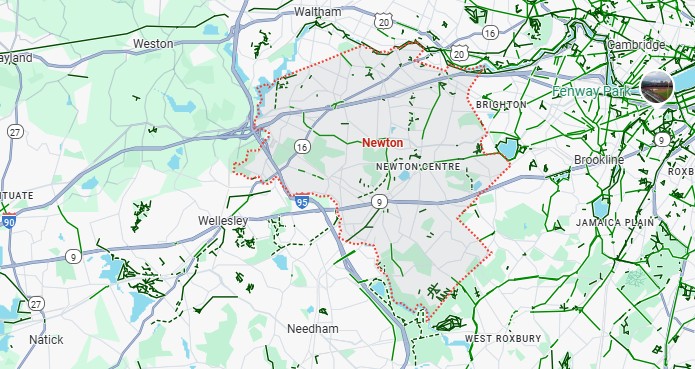
Fast Fix provides residential oven repair throughout Newton, MA, including homes, condos, apartments, and other residential properties within our local service coverage.
ZIP codes served include:
02458
02459
02460
02461
02462
Newton homeowners can contact Fast Fix to confirm service availability for their specific address.
Additional Appliance Repair in Newton
Fast Fix also provides professional repair for other major residential appliances.
Stove Repair in Newton
If your stove has burners that will not heat, delayed ignition, weak gas flames, overheating elements, or control problems, see our stove repair in Newton page.
Refrigerator Repair in Newton
We also diagnose refrigerators with cooling failures, leaks, ice maker problems, unusual noises, and electronic faults.
See our refrigerator repair in Newton page for additional information.
Complete Appliance Repair in Newton
For assistance with additional household appliance categories, see our appliance repair in Newton page.
Request Winter Oven Repair in Newton, MA
Winter cooking often means repeated preheating, longer baking sessions, back-to-back meal preparation, and heavier use of convection and temperature-control systems.
If your oven is preheating slowly, drifting away from the selected temperature, baking unevenly, losing heat, shutting down, producing unusual fan noises, or displaying error codes, Fast Fix provides professional winter oven repair in Newton, MA.
Our technicians identify the source of the problem, complete the appropriate repair, and test the appliance before returning it to normal use.
Contact Fast Fix for dependable oven repair in Newton and professional residential appliance support.
Contact Fast Fix Appliance Repair
Fast Fix Appliance Repair – Waltham, MA
Address: 14 Middlesex Rd, Waltham, MA 02452
Email: fastfixapplianceservice@gmail.com
Phone: +1 (508) 733-3351
Open Hours: 8:00 AM – 8:00 PM